
2026 Focused Discipline:
Russian Strategic and Operational Studies
Our mission is to provide rigorous, independent analysis of Russian military capabilities, strategic thinking, and operational methods in the interest of European defense, security, and stability.
We study Russia not to promote confrontation, but to better understand the capabilities, intentions, limitations, and methods that may affect the security of Europe. Through detailed examination of Russian military doctrine, force structure, strategic and operational concepts, exercises, modernization, logistics, and battlefield performance, we seek to provide decision-makers, defense professionals, researchers, and the public with a clearer understanding of the security environment.
Our guiding principle is that informed deterrence is preferable to military escalation.
Russian military doctrine and force development
Eastern European security and regional stability
NATO-Russia strategic competition
Russian advances in drone warfare
Information warfare and hybrid conflict
Russian military equipment 2026+
Russian force structure 2026+
Historical analysis of Soviet and post-Soviet military thought
Notional scenarios with realistic Russian formations
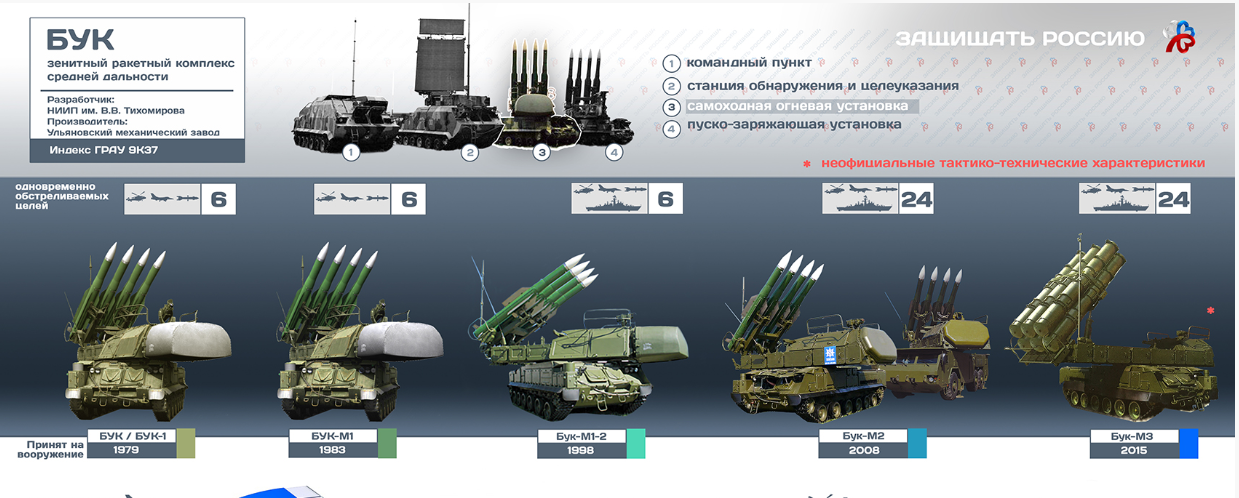
Russian Integrated Air Defense System
Video Analyses: Russian Forces
//Fiction// Operation Collective Deterrence; a Joint Multi-national Task Force deterrence operation conducted on the European Eastern flank. The Joint multi-national task force or JMNTF is comprised of the selected military forces of the United States, the United Kingdom, France, Poland, Germany and Lithuania. The JMNTF will conduct a forward presence deterrence operation from 04 May through 16 May, 2026 in three regions surrounding Belarus in an effort to prevent the adversary use of tactical nuclear weapons (TNW) in Europe. In addition to demonstrating the capability of an enhanced forward presence, the task force will execute non-kinetic electronic warfare operations focused on adversary high value targets within Belarus.//Fiction//
Russia continually seeks to develop technologies that increase capabilities that achieve overmatch using both developments from the civilian sector as well as direct military advances. These discussions focus on currently employed Russian EM capabilities as well as the force structure that supports the deployment of EM capabilities.
As Ukraine (with the support of the collective West) contemplates ballistic missiles strikes deep inside Russia, it's important to understand Russian IADS using the snow dome as a framework to understand the principal capabilities of the Russian layered defense network.
Russia launched the Oreshnik IRBM at the Ukrainian city of Dnipro, this Intermediate Range Ballistic Missile (IRBM) marks the first use of a hypersonic ballistic missile with MIRV warheads and a nuclear payload capability in a direct combat engagement. The Oreshnik is an experimental IRBM based on Russia’s RS-26 Rubezh ICBM, the Oreshnik has a reported range of 3,410 miles, giving it access to most of Europe.
Video Analyses: Worldwide Reporting
Iran Defense Profile
This report was published on YouTube on February 22, 2026. Many Americans view Iran and by extension its military as backwards, unsophisticated and largely incapable of defending themselves from superpowers, like the United States. While Iran is not a serious competitor to the United States and certainly not a near peer, they do possess a large, diversified missile force with an indigenous long-range UAV fleet and they have adapted defense strategies that many analysts would consider to be advanced. Iran is not Syria, or Libya, meaning that Iran is not a shell of its former self, it’s not a vassal state, Iran is a sovereign, modern nation of 90 million people with world class scientists and academic institutions. This brief presents an honest look at some of Iran's defensive capabilities as of February 22, 2026.
Harsh Truths in this installment. Russia launched massive missile and drone retaliatory strike(s) reaching Western Ukraine, Russian troops make gains on advances towards Pokrovsk and the incursion into Kursk slows as Ukrainian forces may be encountering difficulties with sustaining operations. Also, Zelensky asks for long range missiles, Geo-political commentary on why it may be a bad idea to provide this capability to Ukraine.
Taiwan’s ports are of vital importance because Taiwan may not be capable of surviving a blockade for more than a few months if the PRC were to execute a blockade. If access to these ports is blocked, Taiwan will be unable to support itself unassisted for more than 90 days according to many experts. Taiwan’s ports handle the vast majority of trade, including trans-shipments between other economies. Also important is the economic impact, Taiwan’s economy would suffer greatly in the event of a blockade or even a quarantine as this would seriously damage all of their export-oriented industries. In this segment, I will explore these vulnerabilities and discuss the two most likely courses of action that the PRC may execute if they decide to take drastic measures to reclaim Taiwan.
An overview of the Houthis, historical context, support network, capabilities, locations and current operations. The Houthis are no longer a small movement of the Zaydis with a few dozen lightly armed Shias. The Houthis are a large, structured and well funded force with regional reach thanks to Iranian support.
Video Analyses: Brief Conflicts
This video covers my published new book; A Brief Analysis of the Falkland Islands War. This segment discusses the Argentine amphibious invasion, the Argentine nationalistic culture, Peronism and the Junta. The British response highlighting PM Thatcher's immediate actions and initiation of Operation Corporate.
Operation Urgent Fury_Grenada was a US led operation conducted from October 25, 1983 through November 2nd, 1983…this short 8 day conflict came at the height of the Cold War and on the heels of the Iranian Hostage Crisis. It was conducted entirely on the Eastern Caribbean island nation of Grenada, located approximately 100 miles north of Venezuela. 600 American medical students were rescued but the Operation had many failures and a tragic incident costing 18 civilian lives in one day.
Operation Just Cause was the name of the 41 day conflict between Noriega's regime of Panama and the United States which took place from December 20, 1989 through January 31st, 1990. The primary intent of the US operation was to remove General Manuel Noriega of the Panamanian government from office and to secure the safety of 35,000 American civilians living in Panama. This discussion will cover the Road to Crisis in an effort to provide context and a broader understanding of the events leading up to this Central American conflict.
Video Analyses: Fictional Scenarios
The Accord for Global Stability is a fictional analysis of a potential path to peace and stability.
In an unprecedented alignment of World powers, an accord was taking shape that included all four of the world's civilization centers. This accord would be unlike others as it would fundamentally transform the world from one of endless wars and despair to one of peace and hope for mankind. The global elite were scrambling to maintain old systems, but their efforts were in vain. This accord was too powerful, the framework represented a diplomatic and philosophical realignment of how the global powers perceive sovereignty, cooperation and collective security. Read how unlikely partners work together to rebuild the World's civilization centers.
//FICTION// Operations Order for “Scorpion Strike”, a fictional series set in Baja California, Mexico. The NADC has tracked the Islamiyah Jeddah to an isolated and barren desert location on the East coast of Baja California. The joint force is comprised primarily of augmenting marines from the 7th Operational Group out of Twenty-Nine Palms, CA. The marines were not meant to comprise the main body but they performed so well earlier in joint training exercises in Northern Mexico that they were requested by two NADC operational commanders for participation in Operation Scorpion Strike. The marines will establish security in a base of operations that the NADC will occupy for the first stage of this strike, there the NADC will launch precision strikes into IJ territory with the intent of eliminating IJ leadership, key resources and a weapons cache. Later stages will include exhaustive sweeps of the region to ensure that covert elements have been flushed out and removed altogether. The destruction of all IJ assets has been authorized as well as the elimination of any armed combatants that resist the removal of assets.
Intelligence Summary Update to Operation Scorpion Strike.
//FICTION// Joint NADC.-Mexican and US maritime forces will conduct a coordinated interception and interdiction operation off the coast of Ensenada, Baja California to locate, identify, and seize the Hai Yuan vessel suspected of transporting an Improvised Nuclear Device (IND) on behalf of the violent extremist organization Islamiyah Jeddah. The mission will prevent the weapon’s transfer to land and ultimately for use against the city of Phoenix, Arizona. (Fiction)
Book Projects

From Wilderness to War is a new historical military fiction short story. From Wilderness to War is book one of a four book series. Book Two will be available in November 2026.
From Wilderness to War begins along the quiet Potomac River near Alexandria, Virginia in Antebellum America. Our hero; Will, gained an early appreciation for life in the wilderness and mastered outdoor living. His father; Ben, taught him much of his fieldcraft, but most importantly he instilled in his son a strong moral code.
The story expands against a backdrop of war and takes the reader to the untamed Texas Territory during the Mexican American War. The war carried men far from their homes and communities to Mexico and across the rugged frontier. This distant war would test the courage, loyalty and discipline of the most hardened young men America could offer.

November 01, 2026
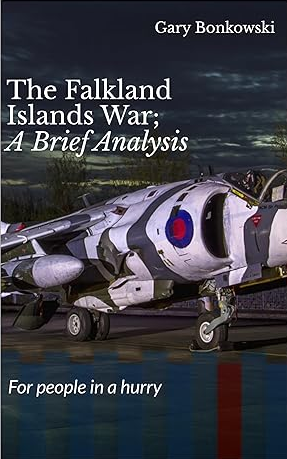
The Falkland Islands War; A Brief Analysis covers the Road to War, the Invasion of the Falklands and Britain's response. A careful critique of British and Argentine leadership as well as the political and intelligence failures.
Prime Minister Thatcher actually changed the context of leadership in her administration from the onset of this conflict by establishing an aggressive culture of forward thinking and leading. A productive by-product was the culture of shared leadership that she also created by empowering her subordinate leaders at the Ministry of Defense and among all of the military branches. They were given the authority to move forward and make strategic decisions that were usually time sensitive strategic ones. This analysis provides the reader with a leader oriented overview of the important issues surrounding this brief conflict.